Home › Guides › Feeding schedule

The Sourdough Starter Feeding Schedule That Actually Sticks
Feed a counter-kept sourdough starter once or twice a day, or keep it in the fridge and feed it once a week. Each feeding means discarding most of the starter, then adding fresh flour and water at a ratio from 1:1:1 (peaks in about 4 hours) to 1:5:5 (peaks in 8 to 12 hours). That is the whole schedule; everything else is tuning. The right rhythm depends on how often you bake: daily counter feedings suit people baking several times a week, while weekly fridge feedings suit everyone else and keep a starter healthy for years. Starters do not die from one missed meal, they die from schedules too demanding to keep, so pick the cadence you can actually sustain. If you fall behind, one or two generous 1:5:5 feedings somewhere warm brings almost any starter back.
How often should I feed my sourdough starter?
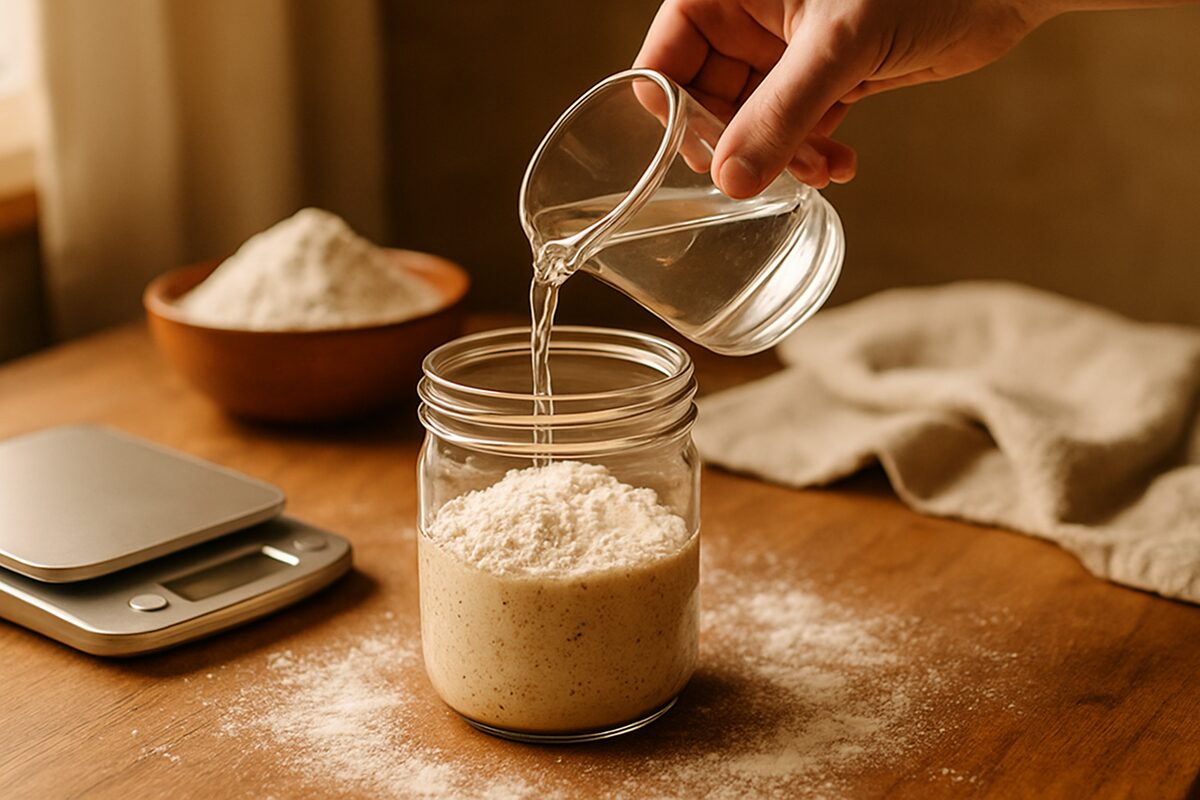
A feeding is always the same move: discard most of the starter, then add fresh flour and water. Ratios are written starter:flour:water by weight, so 1:1:1 means equal weights of all three (e.g. 30 g starter + 30 g flour + 30 g water).
Counter or fridge?
| Where | Feed how often | Best for |
|---|---|---|
| Counter (room temp) | Once or twice a day | Bakers who bake several times a week |
| Fridge | Once a week | Everyone else, most home bakers |
The fridge is not cheating. A refrigerated starter fed weekly stays healthy for years; just give it one or two room-temperature feedings to wake it up before a bake day.
Which feeding ratio should I use?
| Ratio | Example | Approx. time to peak | Best for |
|---|---|---|---|
| 1:1:1 | 30 g starter + 30 g flour + 30 g water | ~4 hours | Fast fuel right before baking |
| 1:2:2 | 30 g starter + 60 g flour + 60 g water | ~6–8 hours | Everyday maintenance |
| 1:5:5 | 20 g starter + 100 g flour + 100 g water | ~8–12 hours | Overnight feeds and hot kitchens |
- 1:1:1: fast fuel, peaks in ~4 hours in a warm kitchen. Good right before baking.
- 1:2:2: the everyday workhorse, peaks in ~6–8 hours.
- 1:5:5: a big meal that slows the cycle, ideal overnight or for hot kitchens, peaks in ~8–12 hours.
To get the exact feeding amounts in grams for any ratio and starter size, run the numbers through our starter calculator.
What if I forget a feeding (or five)?
Pour off any hooch, discard down to a spoonful, and give it a generous 1:5:5 feed somewhere warm. Two or three cycles later it behaves like nothing happened. Starters are far tougher than the internet suggests; even King Arthur Baking's classic starter method assumes a simple once-or-twice-daily rhythm rather than a fussy round-the-clock one.
Frequently asked questions
Can I feed my sourdough starter once a day?
Yes. Once a day works for most counter-kept starters, especially with a bigger ratio like 1:2:2 or 1:5:5 that keeps the food supply ahead of a full day between meals. If the starter collapses and shows hooch before the next feeding, move to a larger ratio rather than feeding more often.
Do I have to discard before every feeding?
Yes, discard first at every routine feeding. Skipping the discard means the jar grows exponentially and the fresh flour is split among ever more hungry microbes, so the starter stays sluggish. Keep the discard in a fridge jar for pancakes or crackers instead of binning it.
How long can a starter go in the fridge without feeding?
A refrigerated starter is happiest fed once a week, but it survives two to four weeks of neglect. It may develop hooch and smell sharp; pour that off, feed 1:5:5 somewhere warm, and after two or three cycles it behaves normally again.
How often should I feed a sourdough starter kept in the fridge?
About once a week. The cold slows fermentation dramatically, so a weekly discard-and-feed keeps a fridge-stored starter healthy for years. It also forgives you: a refrigerated starter survives two to four weeks between feedings, so if you miss a week it is not a problem. Give it one or two room-temperature feedings to wake it up before a bake day.
How much should I feed a starter in the fridge?
Give it a solid feed right before it goes in, around 1:5:5 (say 20 g starter plus 100 g flour plus 100 g water), so it has plenty of food to coast on through the cold week. Let it start fermenting at room temperature for an hour or two after feeding, then refrigerate. Come back to it about a week later, discard, and repeat.

Reminders tuned to your kitchen
Tell Sourdoughy your flour and how warm your kitchen runs, and it builds the feeding routine that fits, then nudges you at feeding time so the rhythm actually holds.
Download Sourdoughy free