Home › Guides › Make a starter

How to Make a Sourdough Starter from Scratch
To make a sourdough starter, mix 60 g flour with 60 g water in a jar, keep it somewhere warm, and from day 3 discard half and feed it 60 g of each daily. In 7 to 14 days you have a living leaven that can raise real bread. Wild yeast and friendly bacteria from the flour and the air move in, and your only jobs are keeping them warm (above about 20°C / 68°F) and keeping them fed. Expect an exciting early boom around day 2 or 3, then a discouraging stall through day 6 or so; that stall is normal, not a failure. The starter is ready when it doubles reliably within 4 to 8 hours of a feeding, smells tangy like yogurt, and shows bubbles throughout the jar. Here is the full day-by-day plan.
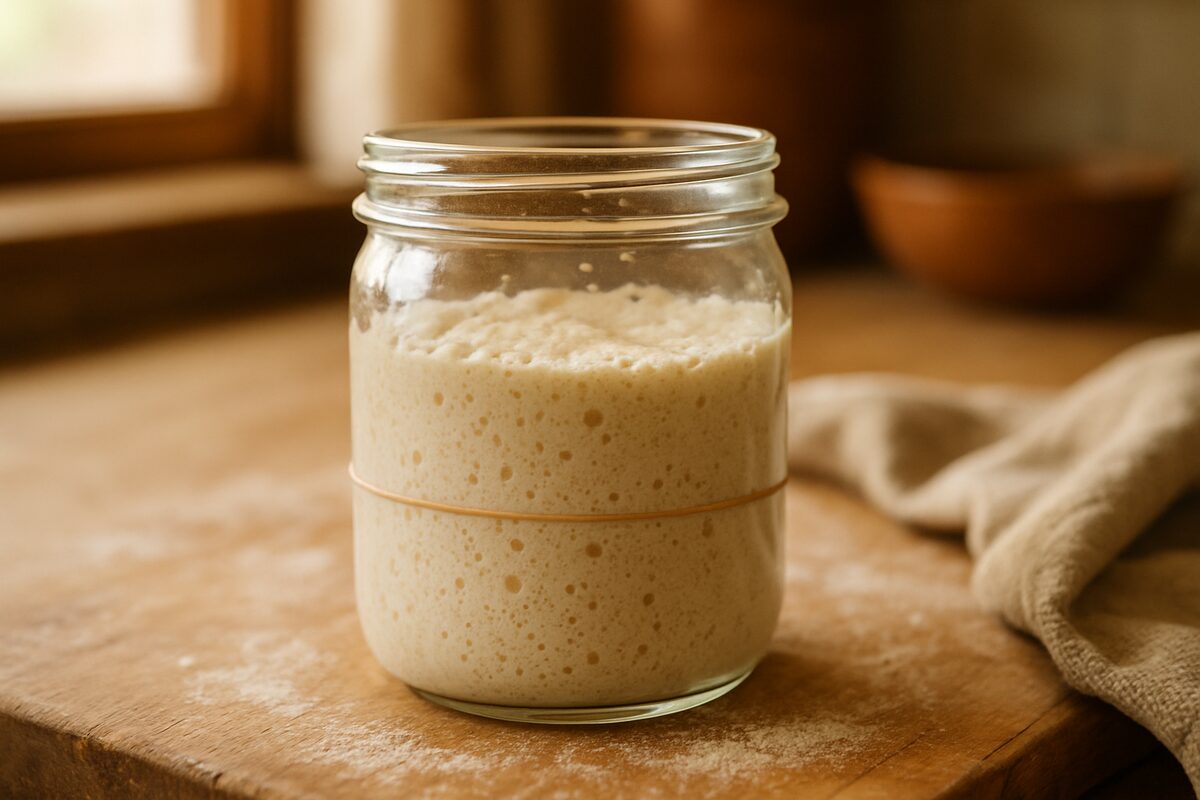
What do I need to make a sourdough starter?
- A jar (roughly 750 ml, with a loose lid)
- Flour: unbleached all-purpose or bread flour. A spoon of whole wheat or rye speeds things up.
- Water: room temperature, filtered or dechlorinated if your tap water is heavily treated
- A scale: sourdough works in grams, not cups
What is the day-by-day schedule?
| Day | What to do | What you will see |
|---|---|---|
| 1 | Mix 60 g flour + 60 g water. Cover loosely, leave somewhere warm. | A plain paste. Nothing yet. |
| 2 | Rest. No feeding needed. | Maybe a bubble or two. |
| 3 | Discard half. Feed 60 g flour + 60 g water. | First real bubbles, a sour smell. |
| 4–6 | Discard half and feed once (or twice) daily. | Often a strong rise, then a discouraging quiet stall. Normal. |
| 7–14 | Keep the daily rhythm. | Predictable doubling within 4–8 hours of feeding. |
Once the starter is established and you want to scale up or change ratios, our starter calculator works out the exact feeding amounts in grams for you.
How do I know my starter worked?
Your starter is ready to bake with when it doubles reliably within 4–8 hours of a feeding, has a bubbly, airy texture, a domed top, and smells tangy like yogurt rather than like nail polish. That usually lands between day 7 and day 14, colder kitchens take longer. This timeline matches classic references like King Arthur Baking's sourdough starter recipe, which follows the same discard-and-feed rhythm.
What are the most common early mistakes?
- Skipping the discard. Without discarding, the starter grows huge and too acidic for the microbes you want.
- A cold spot. Below about 20°C (68°F) everything slows dramatically. The top of the fridge or inside the oven with the light on works.
- Chasing day counts instead of behavior. Ready is a behavior (reliable doubling), not a date.
Frequently asked questions
Can I make a sourdough starter without a kitchen scale?
You can approximate with roughly equal volumes of flour and water stirred to a thick pancake-batter consistency, but a scale is strongly recommended. Flour packs unpredictably in cups, and consistent 1:1 by-weight feedings are what make a young starter's behavior readable.
Do I have to discard half every day?
Yes, during the first two weeks. Discarding keeps the total amount manageable and keeps acidity in check so the yeast you want can establish. Without it, the jar grows huge and too acidic, and the starter stalls.
What kind of flour is best for starting a sourdough starter?
Unbleached all-purpose or bread flour works well. Adding a spoonful of whole wheat or rye flour speeds things up because whole grains carry more wild yeast and nutrients.

Let AI confirm every stage
Sourdoughy builds this exact day-by-day plan for your kitchen, reminds you at feeding time, and reads a photo of your jar each day to tell you which stage your starter is really in.
Download Sourdoughy free