
Hooch: the Liquid on Top of Your Sourdough Starter
The gray, brown, or almost-black liquid on top of a sourdough starter is hooch: alcohol plus water produced by hungry wild yeast. It is harmless, and it simply means the starter ran out of food. The fix is to pour it off (or stir it in), discard down to a couple of spoonfuls, and feed generously at 1:2:2 or bigger in a warm spot. Hooch can smell sharply boozy or like acetone, which alarms new bakers, but it is not mold, not rot, and not a sign the starter is dying. One or two feeding cycles later the jar is back to bubbly and sweet-smelling. The only genuinely bad signs are pink or orange streaks or fuzzy spots on the surface; those mean contamination, and that jar should be thrown out rather than fed.
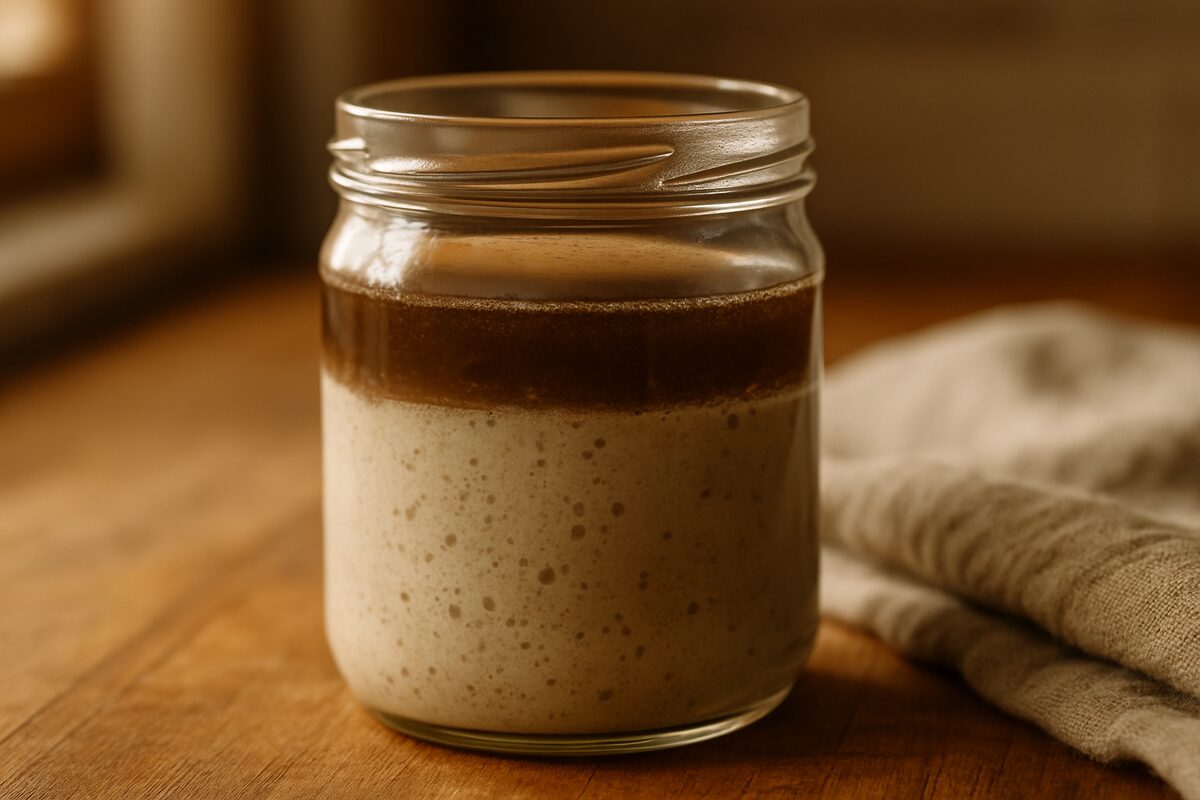
What is hooch on a sourdough starter?
Hooch is alcohol plus water, produced when the wild yeast in your starter runs out of food and shifts metabolism. It can smell sharply boozy or like acetone. It is not mold, not rot, and not a sign of death, it is a hunger signal. As The Perfect Loaf's starter guide notes, a well-fed starter on a steady schedule rarely shows it at all.
What should I do about hooch right now?
- Pour it off (for a milder-tasting starter) or stir it in (for extra tang). Both are fine.
- Discard down to a couple of spoonfuls.
- Feed generously, 1:2:2 or bigger, and park the jar somewhere warm.
One or two cycles later the starter is back to bubbly and sweet-smelling.
Why does hooch keep coming back?
Frequent hooch means the feeding schedule is falling behind the starter's appetite. Three levers fix it:
- Feed a bigger meal (move toward 1:5:5) so the food lasts longer.
- Feed sooner, before the collapse instead of after it.
- Cool it down: a warm kitchen burns through food fast; the fridge stretches the cycle to a week.
Frequently asked questions
Is hooch safe?
Yes. Hooch is just alcohol and water produced by hungry wild yeast, and a starter with plain gray, brown, or near-black liquid on top is safe to keep and feed. The only unsafe signs are pink or orange streaks or fuzzy mold spots, which mean the jar is contaminated and should be discarded.
Should I pour off hooch or stir it in?
Either works. Pour it off for a milder-tasting starter, or stir it in for extra tang. What matters more is what comes next: discard down to a couple of spoonfuls and give a generous feeding, 1:2:2 or bigger, so the hunger that produced the hooch is fixed.
Does hooch mean my starter is dying?
No. Hooch is a hunger signal, not a death sign. One or two generous feedings in a warm spot bring the starter back to bubbly and sweet-smelling. If hooch keeps returning, feed a bigger ratio, feed earlier in the cycle, or move the jar to the fridge.
What does hooch look like on a sourdough starter?
Hooch is a thin, watery liquid layer that separates out and sits on top of the starter, or pools in a well if the starter has sunk. Its color ranges from clear or straw to gray, and deepens to dark brown or near-black the hungrier the starter gets. It looks flat and smooth, not fuzzy or streaky. Pink or orange streaks or fuzzy spots are not hooch and mean the jar should be thrown out.

Snap it and be sure
Not certain it's hooch? Photograph the jar and Sourdoughy's AI tells you whether you're looking at harmless hunger or a real problem, and what to feed next.
Download Sourdoughy free