
What to Do with Sourdough Discard
Sourdough discard is unfed starter, and the best things to do with it are pancakes, waffles, crackers, pizza dough, and quick bakes like banana bread or muffins. Store it in a dedicated jar in the fridge, where it keeps for about a week and grows tangier each day. Discard will not raise bread on its own because its yeast is spent, but as a flavor and tenderness ingredient it is excellent: it replaces equal weights of flour and water in any recipe, so a 100 g scoop of 100% hydration discard stands in for 50 g flour plus 50 g water. To produce less of it in the first place, keep a smaller starter (30 g instead of 200 g) and store it in the fridge with weekly feedings, scaling up only the day before a bake.
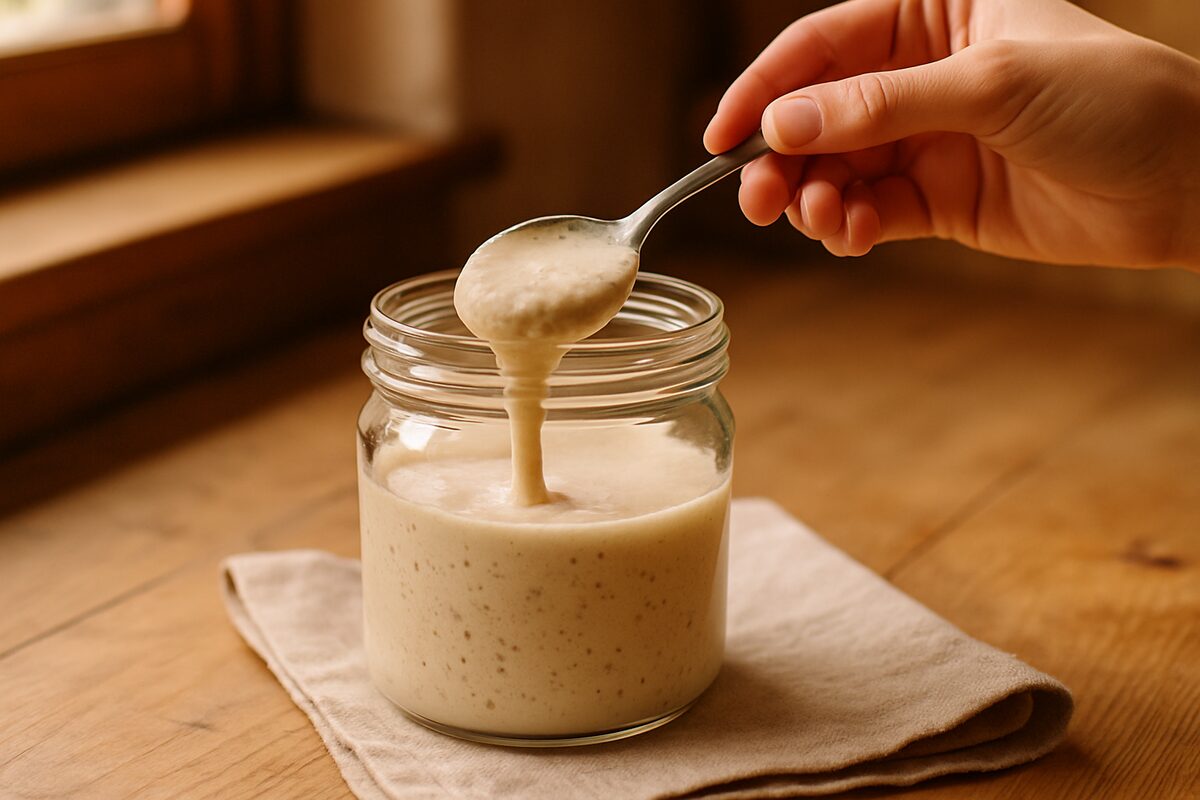
What is sourdough discard?
Discard is simply unfed starter, flour and water already broken down by fermentation, with a mild tang. It will not raise bread on its own (the yeast is spent), but as a flavor and tenderness ingredient it is excellent. Every maintenance routine produces it; even King Arthur Baking's standard starter recipe has you removing most of the jar before each feeding.
How do I store sourdough discard?
Keep a dedicated jar in the fridge and add each day's discard to it. It holds for about a week, growing tangier every day. When the jar smells sharper than you like, it is cracker time (acidity shines there).
What are the best uses for sourdough discard?
- Pancakes and waffles: swap discard for part of the flour and liquid; the tang plus butter is magic.
- Crackers: discard, olive oil, salt, herbs, rolled thin and baked crisp, the classic use for older discard.
- Pizza and flatbreads: discard plus a pinch of commercial yeast makes a flavorful same-day dough.
- Banana bread, muffins, brownies: a spoonful adds moisture and depth without sourness.
Ready to bake? Our sourdough discard recipes hub has step-by-step versions of the favorites, including discard pancakes, crackers, and banana bread, each with real quantities in grams and cups.
How do I make less discard in the first place?
The smarter long-term move: keep a smaller starter. Maintaining 30 g instead of 200 g means discarding a spoonful, not a cupful, and scaling up only the day before a bake. Fridge storage with weekly feedings shrinks the waste further.
Frequently asked questions
Can sourdough discard raise bread on its own?
No. Discard is unfed starter whose yeast is spent, so it cannot leaven a loaf by itself. Use it as a flavor and tenderness ingredient, or pair it with a pinch of commercial yeast for same-day pizza and flatbread doughs.
How long does sourdough discard last in the fridge?
About a week in a dedicated fridge jar, growing tangier each day. Older, sharper discard is best in crackers, where the acidity shines. Throw it out if you see pink or orange streaks or fuzzy mold.
Can I use sourdough discard straight from the fridge?
Yes. Cold discard works fine in pancakes, waffles, crackers, and quick bakes; it just mixes in a little stiffer. Remember it replaces equal weights of flour and water, so 100 g of 100% hydration discard stands in for 50 g flour plus 50 g water.
Can you make sourdough bread with discard?
Not a risen loaf on its own. Discard has no leavening power left, so it cannot raise bread by itself. You can use it for flavor and tenderness in quick breads, pancakes, and crackers, or make a same-day pizza or flatbread by adding a pinch of commercial yeast. To bake a true sourdough loaf, feed the discard first and wait for it to become an active, peaking starter. If you are curious what actually gives real sourdough its rise and tang, our what makes sourdough different explainer covers it.
Can you feed sourdough discard to revive it?
Yes, that is exactly how you refresh a starter. Discard down to a couple of spoonfuls, then feed it fresh flour and water at 1:2:2 or bigger and keep it warm. After two or three feeding cycles the once-spent discard is bubbly, doubling, and ready to bake with again. Reviving is really just discarding and feeding on repeat.
Is sourdough discard good for plants or compost?
Compost yes, in moderation: small amounts of discard break down fine as a nitrogen-ish green, but large dumps can turn slimy and smelly and attract pests, so keep it to a spoonful or two at a time and mix it in well. It is not a fertilizer, and pouring it straight onto plants or soil is not recommended.

Discard recipes, built in
Sourdoughy's recipe library includes discard bakes alongside its boules and batards, so feeding day always ends with something delicious instead of a sad bin.
Download Sourdoughy free